
The coming decade will bring challenges we cannot yet name –and opportunities for those prepared to adapt to the accelerating speed, complexity, and interconnectedness of markets. This preparation begins with education – not just for students, but for the professionals making decisions right now. But what does the future hold, and how can you prepare yourself to be ready for it?
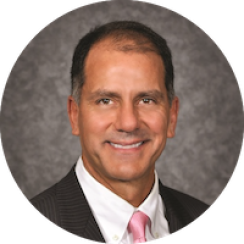
In my own experience, having held three distinct roles – CEO, allocator, and professor – I’ve seen firsthand the value of education. As a portfolio manager, I learned the discipline of longterm investing, the kind that prevents panic when markets fall 20 percent. Fixed-income investing in particular has taught me to disregard tempting headlines and cut through market noise, maintaining an unwavering commitment to my chosen strategy.
As a professor of finance at Louisiana State University, I ask students not only for answers but for their reasoning under pressure. My students manage a portion of LSU’s endowment, pitch investment strategies, and defend their assumptions. The classroom serves as a crucible for learning, where students can fail safely, test bold ideas, and build resilience that carries into professional life.
As CEO of Institutional Investor, I’ve seen how digital information and community accelerate learning. The most valuable insights don’t come from white papers, but from candid conversations: a head of R&D explaining a product pivot, a business development director describing a governance overhaul, or a head of operations outlining supply chain changes. These exchanges strengthen relationships between managers and allocators, building the peer-to-peer networks that matter most in moments of volatility.
Across these roles, one mission unites them: preparing others to act with clarity, judgment, and confidence in the face of turbulence.
Anchors in a Storm: Why Community Matters
The Global Financial Crisis of 2008 stemmed from systemic flaws, while the COVID crisis of 2020 was an external health shock. This contrast led to a shift in risk management, from a focus on financial stability to resilience against broader systemic disruptions. Today, constant change – driven by shifting macroeconomic policies, geopolitical tensions, and technological advances – creates persistent challenges. In this environment, community is essential.

I learned that lesson early in my first CIO role. HR asked me to oversee the administration of the company's retirement plan. I knew the investments well, but when the questions turned to autoenrollment policies, plan loans, and target-date funds, I realized I needed guidance.
I attended an Institutional Investor event featuring public and corporate plan experts. I was the only insurance portfolio manager in the room, but in two days, I learned more than I could have in months on my own. That’s why I now bring my students to our events – so they can ask questions, learn from specialists, and leave with insights that would otherwise take far longer to acquire.
Community-driven financial education thrives when allocators learn from one another. It bridges knowledge gaps in a complex environment, broadens perspectives, and challenges assumptions. Technical skill is foundational, but the capacity to adapt, synthesize complex data, and present it clearly to any audience is invaluable.
Being part of a relevant community helps professionals stay prepared, remain calm, and communicate effectively during disruption. In fields defined by constant pressure and the pursuit of alpha, community is indispensable, offering a trusted space where individuals can share challenges, ask questions, and learn without fear of penalty.
The Classroom as a Decision-Making Lab
At LSU, practice is the foundation of education. As chair of the LSU endowment, I provide students with hands-on experience in managing real capital. Each week, we review economic data, identify risks, and explore investment opportunities through practical decision-making.
Once, a student pitched an allocation idea that seemed reckless. Instead of shutting it down, I asked: “What happens if the storm hits? How do you hedge your assumptions?” We refined his portfolio idea through discussion, guiding him to think critically under pressure and lead peers through dialogue rather than dictating answers.
Resilience is not about avoiding mistakes, nor is it about perfection. It is recovering from mistakes and learning with sharper judgment.
Whether as CEO, allocator, or professor, the hardest discipline is resisting the impulse to react to every headline. Overreacting undermines long-term goals and strategy. I encourage students and professionals to focus instead on structural drivers, such as cross-asset correlations, macroeconomic trends, and scenario stress testing, rather than chasing consensus trades.
In both life and investing, endurance is built on consistency, steady judgment, and deliberate responses. I strive to integrate this approach into all my roles, fostering a continuous cycle of knowledge and disciplined behavior that lays the foundation for resilience.
Embedding ESG, Leadership, and Human Capital
Resilience is not only technical; it is ethical and human. Financial institutions are increasingly integrating ESG factors into their risk frameworks, reflecting the broader adoption of sustainable practices. With rising regulatory scrutiny, technological advancements, and a growing emphasis on social and environmental responsibility, businesses must do more than comply; they must innovate and adapt to achieve their long-term goals.
Equally important is strengthening Diversity, Equity, and Inclusion (DEI) initiatives to foster inclusive workplaces and expand equal opportunity. Supply chain equity is also critical, ensuring fair labor practices, ethical sourcing, and workers' rights across global networks. Community engagement forms another cornerstone: companies must collaborate with local stakeholders to address challenges such as poverty, education, and access to healthcare, while cultivating stronger relationships and trust.
Education, of both professionals and students, plays a key role. Over time, these efforts cascade through communities, shaping cities, countries, and regions with lasting impact.
Guidance for Emerging Professionals
For those entering the industry, technical skills are the baseline. The differentiators are adaptability, ethical grounding, and perspective.
The best investors I know actively seek challenges to their own thinking. Attend a conference outside your specialty, shadow a more experienced colleague, or sit in on a governance discussion. Each broadens judgment and sharpens decision-making.
I tell students: Say yes to opportunities that stretch you. Even if you’re unsure you’re ready, those experiences prepare you for the complexity ahead. Uncertainty is inevitable. The goal is not to eliminate it, but to face it with preparation, calm, and adaptability – the same principles that guide hurricane response in Louisiana.
The Real ROI of Education
The turning points in my career – from mastering retirement plan administration to rethinking a portfolio’s private market allocation – came from conversations with peers who had already solved the problems I faced.
For today’s professionals, continuous learning beyond formal education is essential. For tomorrow’s professionals, the goal is to enter the field not just with technical expertise, but with resilience, judgment, and strong networks that can weather turbulence.
Markets will always throw storms at us – sometimes literal, sometimes metaphorical. Perseverance, rather than panic, comes from preparation, critical thinking, and a supportive community.
That’s what I strive to give students and industry peers alike: not just formulas in a textbook, but the experience of thinking like an investor, the courage to ask questions, and the relationships that turn insight into action.
By teaching the next generation to balance risk with patience, ethics with ambition, and theory with real-world judgement, we do more than develop skilled professionals – we cultivate resilient leaders. In a rapidly changing world, that resilience is the ultimate product of the education we can offer.