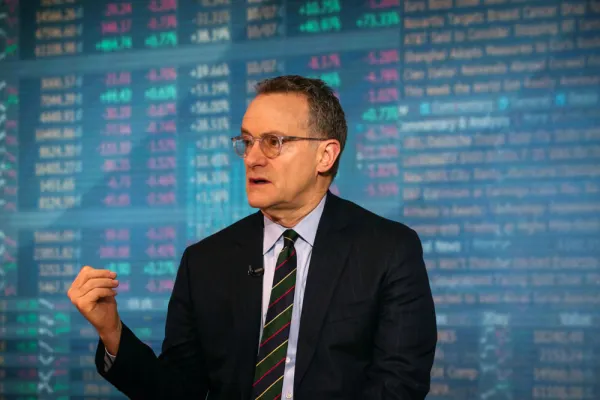


After building the Illinois Police Officers' Pension Investment Fund from scratch since joining in May 2021 as the plan’s debut investment chief, Kent Custer is ready to make sizeable investments in private markets and active international equities—all while remaining “very prudent and risk aware.”
Since launching its private markets program in 2024, Illinois Police has hired Albourne as its consultant and selected Oaktree and Lexington for private credit and private equity, respectively. Illinois Police has also hired Greg Turk from Custer’s old stomping grounds at the Teachers’ Retirement System of Illinois as deputy CIO and director of private markets. Searches for private infrastructure, private real estate, and another private credit manager are also underway.
“For the past several months, we've been really working on the private market portfolio,” the Allocators’ Choice Award finalist for public pension CIO of the year told Institutional Investor.
Illinois Police manages the combined assets of 357 Illinois police pension funds. The $15 billion fund now has a 20 percent target allocation to private markets, including seven percent in private equity, five in private credit, five in real estate, and three in infrastructure.
Before Custer could think about private markets, he had to build the fund itself.
Starting a Brand-New Fund

When Custer was asked to build one pension portfolio to manage hundreds of plans in the state five years ago, the former submarine officer (turned aluminum industry executive turned investor) had already built a name for himself structuring or restructuring pensions that had gotten over their skis. He had done this with the Illinois Prepaid Tuition Trust Fund when he joined in 2011, and again with the Dallas Police and Fire Pension System in 2018.
“I was very happy in Dallas,” he said. “But when you get an opportunity to start a brand-new fund that was going to be over $10 billion from scratch, you take a second look.”
Custer hired a custodian (State Street), a consultant (Verus, now Cerity), investment managers (State Street Global Advisors and RhumbLine), a transition team, and transition consultant (EY).
Then it was time to put together the investment policy. “The asset allocation was all pretty vanilla,” he said: Apart from a 2 percent allocation to U.S. real estate, “it was all passive.”
Custer’s team also put together a cash management program for the 357 incoming funds. Developing the transition rules and processes was also complicated: All the assets coming from every fund had to be identified on a certified asset list. The funds then had to connect State Street and their custodians to get the assets over.
Meanwhile, there was also legal wrangling going on with funds opposing the consolidation that began in Illinois Circuit Court in December 2021 until the Illinois Supreme Court resolved it in January 2024. “We weren't really a part of the legal wranglings; we weren't a plaintiff or a defendant,” Custer said, adding that it had an impact.
Even prior to the state supreme court’s final ruling, Custer began adding complexity to the unitized, mutual fund-like portfolio in 2023.
Illinois Police uses an investment philosophy that Custer calls “simplicity plus: ”Don’t invest in anything you don’t need, and be clear about why you’re investing.
When designing the portfolio, Custer started with equities as the growth engine and then established some risk mitigation. The fund expected the cashflow to be negative but wasn’t sure by how much, so it started off at three percent in cash, before reducing to one percent (Custer described the fund as currently cashflow neutral).
For Custer, everything else is just about diversification while still maintaining return potential.
Expanding into Active
Custer is now looking for ways to make the fund’s success repeatable and sustainable for decades. In addition to looking to hire more staff, including finding a replacement for outgoing founding executive director Richard White, who’s retiring at year-end, Illinois Police is also seeking active managers. Since hiring three active international small-cap managers, Custer and the team have been adding more managers to the roster, including in bank loans and emerging markets equities ex-China.
“I'm humble about active management,” Custer said. “I've seen my share of investment managers that didn't work out.”
While the fund considers all approaches, it prefers funds-of-one over fund-of-funds. “There’s a danger of being overly cautious,” he said. “I'm not saying that there's no good fund-of-fund approach out there, but they can be potentially overdiversified and have a pretty high fee threshold to get over.”
Custer sees private markets as “an area where it’s good to be humble and appreciative of the higher level of fees and the loss of liquidity,” before adding they’re “a very efficient way to deploy capital.”